
"coffee and natural disasters"
900 article(s) found

A brief introduction to the description of flavor and aroma characteristics of artificial hybrid variety Golden Kaduai Coffee
Kaduai is an artificial hybrid of Kaddura and Mondu Novo. Kaduai has a good ability to resist natural disasters, especially wind and rain. Kaduai tree species are relatively low, compared with other coffee trees, the fruit of Kaduai is stronger and harder to pick. The fruit is both red and yellow. So far, it has not been found that yellow fruit is better than red fruit.

Introduction to the characteristics of taste quality of altitude flavor description treatment in Sumatra coffee producing area of Indonesia
The taste and quality characteristics of altitude flavor description treatment in Sumatra coffee producing area of Indonesia introduce that Indonesian coffee is an Arabica species. The leaf rust disaster at the end of the 18th century destroyed the Arabica manor. at first, the Dutch tried to plant Liberian species, and later, began to plant Robusta species on a large scale. Today, Arabica accounts for about 10-15% of the coffee produced in Indonesia, and the rest is Rob.

Who is more advanced, Arabica or Robusta? The difference between Arabica Coffee and Robusta
Professional coffee knowledge exchange more coffee bean information please follow the coffee workshop (Wechat official account cafe_style) Front Street Coffee Guatemalan Coffee | Polsa Pacamara | Rosa 2018 Panamanian Emerald Manor Red Standard Sun | Blue Standard Water washing | Green Standard Sun I believe many friends have seen the news: Arabica is on the verge of extinction. The main idea of news is that it is made up of

Introduction to the regional treatment method for the flavor description of Salvadoran coffee beans
In the 19th century, Salvadoran coffee was an important cash crop, and the government legislated to collect taxes and encourage planting and export. although coffee farmers in the country could not get technical or financial assistance, they were excellent among many coffee-producing countries in terms of the growth of production per hectare. The production of coffee

Tropical climate, introduction of Santa Ana Volcano region with different elevations of El Salvador coffee-producing countries
The civil war in the 1980s made many coffee farmers in war zones unwilling to spend agricultural fertilizer on coffee plantations, resulting in the fact of "organic planting". After the war, coffee plantations with organic cultivation were set up with the assistance of the government, and many of them obtained the Eco-ok certification of the Rainforest Alliance (Rain forest-Alliance). At present, 2000 hectares of coffee plantations have been organically certified.

Flavor description of Salvadoran coffee beans introduction to manors in producing areas
Flavor description of Salvadoran coffee beans the characteristics of varieties in producing areas introduce the endless coffee fields, most of which are harvested mechanically in order to meet the economic benefits. When 75% of the coffee fruit in the coffee garden turns red, it starts to be harvested mechanically, followed by the same pre-operation of washing, moving into the sink to remove the floating beans, sifting out the sunken beans, and then using a large pulp screening machine to dig out the pulp.

A brief introduction to the present situation of Market Price production of High-quality Coffee in El Salvador
The current situation of coffee production is a natural and man-made disaster, which is a perfect description of the challenges facing the coffee industry in El Salvador. Despite getting rid of the haze of war, El Salvador's coffee production still faces challenges from time to time, including: 1998, hurricanes; 2001, earthquakes; 2002, volcanic eruptions; 2012, leaf rust

The former coffee kingdom, Brazilian coffee.
In the 1660s, the South American continent was still in a natural silence, and the aborigines lived a happy and heavenly life in this rich and fertile land. Brazil, which covers an area of more than 3 million square kilometers, occupies a major part of South America. In 1727, Pachta, a Portuguese officer, seduced the wife of the Governor of French Guiana into introducing coffee to Brazil with coffee seeds.
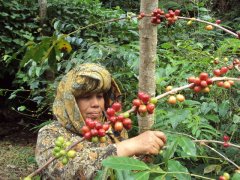
The common sense of coffee tree planting can coffee trees be planted at home? what are the disasters of coffee trees?
Professional coffee knowledge exchange more coffee bean information please follow the coffee workshop (Wechat official account cafe_style) A coffee tree bears fruit several times a year. Coffee trees grow in the tropics between Tropic of Cancer and Tropic of Cancer and near the equator. There are also great differences in appearance among the so-called world coffee growth zones, caffeine varieties and regional factors. Evergreen

Description of the flavor of Salvadoran coffee with long-lasting rhyme introduction to the taste of varieties in producing areas
Natural and man-made disasters and ill-fated fate can be best used to describe the challenges facing the coffee industry in El Salvador. Despite getting rid of the haze of war, El Salvador's coffee production still faces challenges from time to time, including: 1998, hurricanes; 2001, earthquake; 2002, volcanic eruption; 2012, leaf rust
Brazil-once the Kingdom of Coffee
In the 1660s, the South American continent was still in a natural silence, and the aborigines lived a happy and heavenly life in this rich and fertile land. Brazil, which covers an area of more than 3 million square kilometers, occupies a major part of South America. In 1727, Pachta, a Portuguese officer, seduced the wife of the Governor of French Guiana into introducing coffee to Brazil with coffee seeds.

Brazil was once the coffee kingdom.
In the 1560s, South America was still in a natural silence, and the aborigines lived a happy and heavenly life on this rich and fertile land. Brazil, covering an area of more than 3 million square kilometers, occupies the main part of South America. in 1727, Pachta, a Portugal military officer, seduce that wife of the governor of Guyane française with coffee seeds and introduced coffee to Brazil.
The former coffee kingdom of Brazilian coffee
In the 1660s, the former coffee kingdom of Brazil, the South American continent was still in a natural silence, and the indigenous people lived a happy and heavenly life in this rich and fertile land. Brazil, which covers an area of more than 3 million square kilometers, occupies a major part of South America. In 1727, Pachta, a Portuguese officer, seduced the wife of the Governor of French Guiana with coffee seeds.

The former coffee kingdom of Brazil
In the 1660s, the South American continent was still in a natural silence, and the aborigines lived a happy and heavenly life in this rich and fertile land. Brazil, which covers an area of more than 3 million square kilometers, occupies a major part of South America. In 1727, Pachta, a Portuguese officer, seduced the wife of the Governor of French Guiana into introducing coffee to Brazil with coffee seeds.

Introduction to the planting characteristics, flavor and taste of Salvadoran coffee beans
El Salvador coffee beans are characterized by planting characteristics, flavor and taste. In the 19th century, coffee in El Salvador was an important cash crop, and the government legislated to collect taxes and encourage planting and export. although coffee farmers in the country cannot get technical or financial assistance, they are excellent among many coffee-producing countries in terms of the growth of production per hectare. The output value of coffee is like fire
The coffee kingdom of boutique coffee Brazilian coffee
In the 1660s, the South American continent was still in a natural silence, and the aborigines lived a happy and heavenly life in this rich and fertile land. Brazil, which covers an area of more than 3 million square kilometers, occupies a major part of South America. In 1727, Pachta, a Portuguese officer, seduced the wife of the Governor of French Guiana into introducing coffee to Brazil with coffee seeds.

A brief introduction to the History and Culture of the Origin and Development of Renas Manor in El Salvador Coffee Santa Ana Volcano area
The current situation of coffee production is a natural and man-made disaster, which is a perfect description of the challenges facing the coffee industry in El Salvador. Despite getting rid of the haze of war, El Salvador's coffee production still faces challenges from time to time, including: 1998, hurricanes; 2001, earthquakes; 2002, volcanic eruptions; 2012, leaf rust

Introduction to the quality characteristics of El Salvador Mercedes Coffee Bean Flavor description treatment
El Salvador coffee beans are suffering from natural and man-made disasters and ill-fated destinies, which can be used to describe the challenges facing the coffee industry in El Salvador. Despite getting rid of the haze of war, El Salvador's coffee production still faces challenges from time to time. These include: 1998, hurricanes; 2001, earthquake; 2002, volcanic eruption; 2012, leaf rust

Description of Grinding scale Flavor of Coffee beans in Honor Manor in El Salvador
The grinding scale flavor of coffee beans in Honor Manor in El Salvador describes the varieties in the manor area and introduces the present situation of coffee production in El Salvador. Natural and man-made disasters and ill-fated destinations are the most appropriate way to describe the challenges facing the coffee industry in El Salvador. Despite getting rid of the haze of war, El Salvador's coffee production still faces challenges from time to time, including: 1998, hurricane; 2001

Cultural stories about the History and Development of Brazilian Coffee beans the flavor and taste characteristics of Brazilian Arabica coffee varieties
Following Kaibei (official Wechat account vdailycom) found that Brazilian Coffee is famous for its strong aroma, but it has something to do with killer bees in Africa, whose stings scare everyone. In Brazil, South America, in 1956, scientists introduced dozens of killer bees from Africa, which were accidentally released from the hive. Like